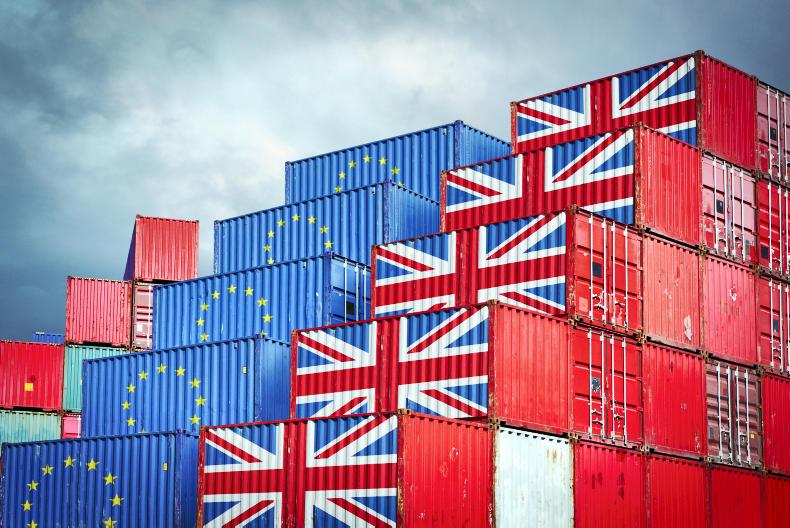
If there is a no-deal Brexit, then trade between Ireland and the UK would be on the same basis as any other third country – the term given to all countries outside the EU without a specific trade agreement in place with the EU, such as Canada and Japan.
That creates two issues in relation to trade, the imposition of tariffs and non-tariff measures (NTM).
Tariffs are the rate of taxes on products traded between countries that are members of the World Trade Organisation (WTO) in the absence of a specific trade deal.
Member countries have the option to vary these as the UK proposes but if they do vary then this must be available to all WTO members.
NTM is the checking and managing of standards on goods imported to the EU from third countries that don’t have a specific trade agreement as would be the case with the UK if Brexit happens without a deal.
Non-tariff measures (NTM)
The arrival of the EU single market in 1993 meant that for the purposes of quality standards, product from every area of the EU is deemed of equal standard and no checks are necessary when travelling between member states.
For the UK, this ends with a no-deal Brexit and the likelihood is reversion to the pre-single market area where exports travelled accompanied by veterinary certificate and under seal.
The default for imports to the EU from third countries is that 20% of deliveries will be physically inspected.
Looking to the future, it is likely that with a deal UK exports would get the Canadian terms of 10% of exports being physically inspected
By agreement, the free trade agreement with Canada (CETA) has a reduced rate of inspection to 10% for Canadian imports and New Zealand has as low as 1% for lamb deliveries to the EU.
Looking to the future, it is likely that with a deal UK exports would get the Canadian terms of 10% of exports being physically inspected but a no-deal Brexit would mean 20% physical inspections for Northern Irish produce entering the EU.
Even if tariffs in themselves weren’t sufficient to frustrate trade from north to south in Ireland, this would be an insurmountable barrier because the Republic of Ireland currently only has two approved entry points for inspection of third country imports – Dublin Port and Dublin Airport.
With the UK declaring that there are no checks of any kind on product travelling from the Republic of Ireland to Northern Ireland, NTMs will not be an issue at least in the short term.
What sectors will be hit hardest?
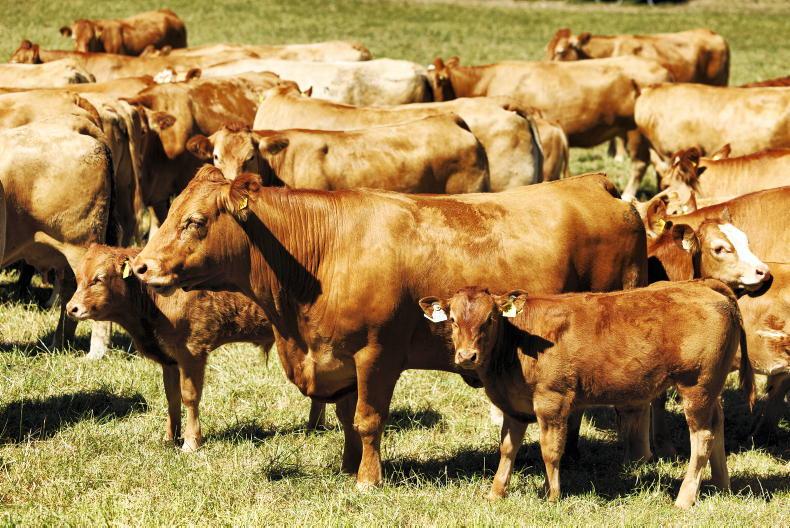
If there is a no-deal Brexit, there will be a cost to every sector of Irish agriculture with the greatest impact felt by the beef sector which could get hit for over €1bn if a full WTO tariff was applied as is being campaigned for by the Ulster Farmers’ Union.
If the current UK proposed tariff structure is applied, the market value will reduce by up to €500m.
Other sectors would also lose out but not by as much. Dairy would take a hit of €50 to €100m, poultry €28m and boneless pigmeat €17m.
Sheepmeat would also take a hit of €9m on UK sales but this is likely to be more than offset by opportunities that would arise in the EU with the UK effectively excluded by tariffs if there is a no-deal Brexit.
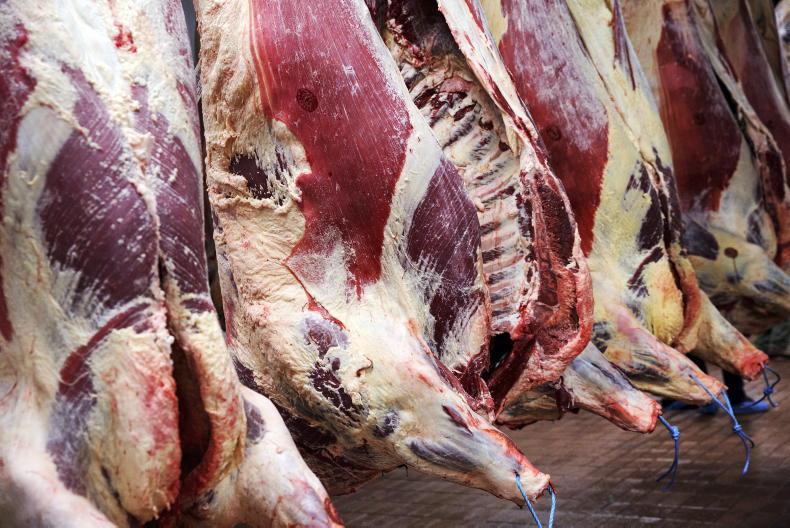
While a no-deal Brexit would negatively affect every sector of agriculture, beef would take the biggest hit of all. Ironically, this is not because of tariff imposition by the UK but the opposite – the UK is proposing a 230,000t zero tariff beef import quota.
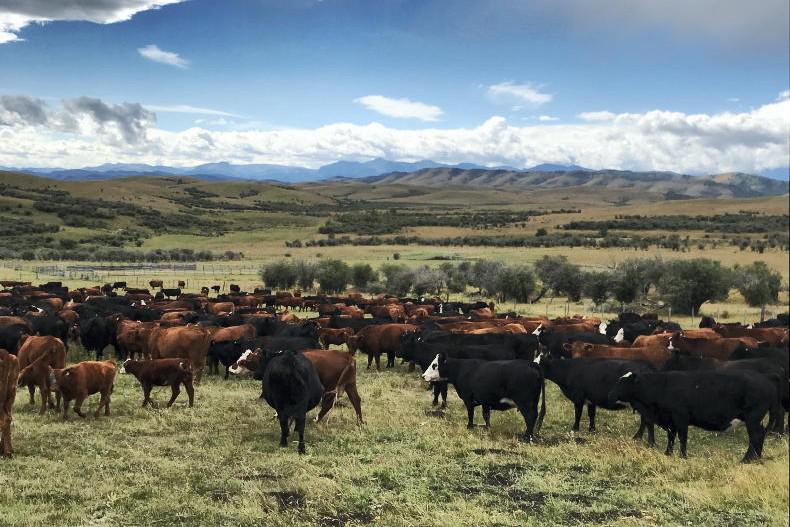
The problem for Irish (and UK) farmers with this is that it would be open to all WTO members, meaning that the big exporting South American countries of Brazil, Argentina and Uruguay could supply the UK market on the same terms as Ireland would in the event of a no-deal Brexit.
Traditionally, British beef carries a premium, worth at present around 20c/kg but this has been as high as €1/kg in the past
It is difficult to estimate the extent to which this level of access to the UK market would have on Irish or domestic UK beef prices.
Traditionally, British beef carries a premium, worth at present around 20c/kg but this has been as high as €1/kg in the past.
Given that Brazil and Argentina would be two of the biggest users of a tariff-free quota, it is worth noting that their farm-gate price is in the region of €2.25/kg at present.
It is very unlikely that the Irish price would fall to this level but it would be very possible that the Irish price could align with Australian and New Zealand beef prices which are currently just over €3/kg. A 50c/kg cut from current prices across the entire Irish kill in 2018 would cost the Irish industry €316m.
The impact of huge quantities of cheap beef on the UK market has led recently to a campaign by the farming organisations for the Government to revisit its tariff proposals which were unveiled just ahead of the original Brexit date of 31 March this year.
Full WTO tariffs
The Ulster Farmers’ Union is of the view that in the event of a no-deal Brexit with full WTO tariffs being imposed by the EU, then the UK should reciprocate with full WTO tariffs.
If this were to happen, it would mean Irish beef sales to the UK would carry a tariff of €3.03/kg, plus 12.8% of the value.
Applying this to the 300,000t of Irish beef exported to the UK in 2018 would add a cost of over €1bn on Irish beef exports to the UK which wouldn’t be commercially viable.
While the dairy sector is not as exposed as the beef sector, it could still be hit by €50m to €100m, which is the equivalent of around 1c/l.
This is particularly acute for our cheddar business which takes about 2bn litres of Irish milk.
Not only will the industry be dealing with tariff, logistic and regulatory issues it will be fully exposed to full competition from the likes of the US and New Zealand.
The proposed UK tariff on cheddar is €221/t which would imply a €17m cost to cheddar exports to the UK.
Butter
The proposed UK tariff on butter is €605/t, which implies a cost of €24m on butter exports to the UK.
Retention of tariff-free access to the UK market is critical, particularly for Irish cheddar exports.
Overall, the loss of or dis-improved access to the UK market could have a destabilising effect on the overall value of the Irish dairy sector.
Uncertainty
In addition, the uncertainty surrounding the future trading relationship between the UK and EU presents a particular threat to the current highly integrated all-island milk processing structures.
Ireland imports over 800m litres of milk from Northern Ireland for processing.
That would make the business no longer viable and would mean that milk from Northern Ireland would have to be processed in Northern Ireland, which may be a considerable challenge.
Irish sheepmeat exports to the UK would be subject to full WTO tariffs of €3.12/kg, plus 12.8% of value, as they have not proposed a concession tariff in view of the UK oversupply situation. That means that the 9,765t of Irish sheepmeat exported to the UK in 2018 would attract tariffs to the value of €9m.
However, with the EU applying full WTO tariffs, the UK would be effectively excluded from the EU market in a no-deal Brexit.
The EU is currently a net importer of sheepmeat and with the UK, the third biggest exporter of sheepmeat in the world off the pitch, Ireland would be ideally placed to avail of the opportunity to develop exports to continental Europe. This means that sheepmeat would be the sector of Irish agriculture least affected by a no-deal Brexit.
North-south trade will be most disrupted in the sheepmeat sector, with 420,000 lambs going south for processing
It would be very different for sheep producers in Northern Ireland.
North-south trade will be most disrupted in the sheepmeat sector, with 420,000 lambs going south for processing.
Given that the UK is currently the third biggest exporter of sheepmeat in the world, mainly to EU markets, there will be a major over supply in the event of a no-deal Brexit.
Northern Ireland
If we calculate that 420,000 live lambs would attract a tariff of 85c/kg, it would add a cost of €38.47 to each 45kg lamb entering the Republic of Ireland, which would mean that sending lambs south for processing would not be commercially viable if there is a no-deal Brexit.
Of course, the certification process would in itself put an end to this trade, irrespective of the tariff position.
However, if the backstop was in place and Northern Ireland was allowed continued trading with the EU, as it currently does, then this business could continue without tariffs being imposed.
Similarly, NI lambs wouldn’t be treated as third country imports and therefore would not need to go through the approved inspection points.
Business would continue as usual on north-south trade in this event.
The UK was Ireland’s main export market for pigmeat in 2018, taking 147,840t of pigmeat exports, which is 56% of the total.
In a no-deal Brexit, this product would become liable for tariffs which the UK has set at 11.4c/kg.
Applying that to the volume of pigmeat exported to the UK in 2018 would add a tariff cost of €17m.
However, where pigmeat exports transited through Northern Ireland to Britain then the UK is proposing no checks or tariffs.
In 2018, 466,000 pigs went north for processing and if the UK were not to enforce a border on the island of Ireland, this business should be able to continue even with a no-deal Brexit.
According to AHDB figures, the UK imported 45,220t of Irish poultry meat in 2017.
In its proposed tariffs for poultry announced in March 2019, the rate set for boneless chicken imports to the UK was 61.8c/kg. If the rate was applied to this volume of Irish chicken exports, it would add a cost of €27.9m.
If there is a no-deal Brexit, then trade between Ireland and the UK would be on the same basis as any other third country – the term given to all countries outside the EU without a specific trade agreement in place with the EU, such as Canada and Japan.
That creates two issues in relation to trade, the imposition of tariffs and non-tariff measures (NTM).
Tariffs are the rate of taxes on products traded between countries that are members of the World Trade Organisation (WTO) in the absence of a specific trade deal.
Member countries have the option to vary these as the UK proposes but if they do vary then this must be available to all WTO members.
NTM is the checking and managing of standards on goods imported to the EU from third countries that don’t have a specific trade agreement as would be the case with the UK if Brexit happens without a deal.
Non-tariff measures (NTM)
The arrival of the EU single market in 1993 meant that for the purposes of quality standards, product from every area of the EU is deemed of equal standard and no checks are necessary when travelling between member states.
For the UK, this ends with a no-deal Brexit and the likelihood is reversion to the pre-single market area where exports travelled accompanied by veterinary certificate and under seal.
The default for imports to the EU from third countries is that 20% of deliveries will be physically inspected.
Looking to the future, it is likely that with a deal UK exports would get the Canadian terms of 10% of exports being physically inspected
By agreement, the free trade agreement with Canada (CETA) has a reduced rate of inspection to 10% for Canadian imports and New Zealand has as low as 1% for lamb deliveries to the EU.
Looking to the future, it is likely that with a deal UK exports would get the Canadian terms of 10% of exports being physically inspected but a no-deal Brexit would mean 20% physical inspections for Northern Irish produce entering the EU.
Even if tariffs in themselves weren’t sufficient to frustrate trade from north to south in Ireland, this would be an insurmountable barrier because the Republic of Ireland currently only has two approved entry points for inspection of third country imports – Dublin Port and Dublin Airport.
With the UK declaring that there are no checks of any kind on product travelling from the Republic of Ireland to Northern Ireland, NTMs will not be an issue at least in the short term.
What sectors will be hit hardest?
If there is a no-deal Brexit, there will be a cost to every sector of Irish agriculture with the greatest impact felt by the beef sector which could get hit for over €1bn if a full WTO tariff was applied as is being campaigned for by the Ulster Farmers’ Union.
If the current UK proposed tariff structure is applied, the market value will reduce by up to €500m.
Other sectors would also lose out but not by as much. Dairy would take a hit of €50 to €100m, poultry €28m and boneless pigmeat €17m.
Sheepmeat would also take a hit of €9m on UK sales but this is likely to be more than offset by opportunities that would arise in the EU with the UK effectively excluded by tariffs if there is a no-deal Brexit.
While a no-deal Brexit would negatively affect every sector of agriculture, beef would take the biggest hit of all. Ironically, this is not because of tariff imposition by the UK but the opposite – the UK is proposing a 230,000t zero tariff beef import quota.
The problem for Irish (and UK) farmers with this is that it would be open to all WTO members, meaning that the big exporting South American countries of Brazil, Argentina and Uruguay could supply the UK market on the same terms as Ireland would in the event of a no-deal Brexit.
Traditionally, British beef carries a premium, worth at present around 20c/kg but this has been as high as €1/kg in the past
It is difficult to estimate the extent to which this level of access to the UK market would have on Irish or domestic UK beef prices.
Traditionally, British beef carries a premium, worth at present around 20c/kg but this has been as high as €1/kg in the past.
Given that Brazil and Argentina would be two of the biggest users of a tariff-free quota, it is worth noting that their farm-gate price is in the region of €2.25/kg at present.
It is very unlikely that the Irish price would fall to this level but it would be very possible that the Irish price could align with Australian and New Zealand beef prices which are currently just over €3/kg. A 50c/kg cut from current prices across the entire Irish kill in 2018 would cost the Irish industry €316m.
The impact of huge quantities of cheap beef on the UK market has led recently to a campaign by the farming organisations for the Government to revisit its tariff proposals which were unveiled just ahead of the original Brexit date of 31 March this year.
Full WTO tariffs
The Ulster Farmers’ Union is of the view that in the event of a no-deal Brexit with full WTO tariffs being imposed by the EU, then the UK should reciprocate with full WTO tariffs.
If this were to happen, it would mean Irish beef sales to the UK would carry a tariff of €3.03/kg, plus 12.8% of the value.
Applying this to the 300,000t of Irish beef exported to the UK in 2018 would add a cost of over €1bn on Irish beef exports to the UK which wouldn’t be commercially viable.
While the dairy sector is not as exposed as the beef sector, it could still be hit by €50m to €100m, which is the equivalent of around 1c/l.
This is particularly acute for our cheddar business which takes about 2bn litres of Irish milk.
Not only will the industry be dealing with tariff, logistic and regulatory issues it will be fully exposed to full competition from the likes of the US and New Zealand.
The proposed UK tariff on cheddar is €221/t which would imply a €17m cost to cheddar exports to the UK.
Butter
The proposed UK tariff on butter is €605/t, which implies a cost of €24m on butter exports to the UK.
Retention of tariff-free access to the UK market is critical, particularly for Irish cheddar exports.
Overall, the loss of or dis-improved access to the UK market could have a destabilising effect on the overall value of the Irish dairy sector.
Uncertainty
In addition, the uncertainty surrounding the future trading relationship between the UK and EU presents a particular threat to the current highly integrated all-island milk processing structures.
Ireland imports over 800m litres of milk from Northern Ireland for processing.
That would make the business no longer viable and would mean that milk from Northern Ireland would have to be processed in Northern Ireland, which may be a considerable challenge.
Irish sheepmeat exports to the UK would be subject to full WTO tariffs of €3.12/kg, plus 12.8% of value, as they have not proposed a concession tariff in view of the UK oversupply situation. That means that the 9,765t of Irish sheepmeat exported to the UK in 2018 would attract tariffs to the value of €9m.
However, with the EU applying full WTO tariffs, the UK would be effectively excluded from the EU market in a no-deal Brexit.
The EU is currently a net importer of sheepmeat and with the UK, the third biggest exporter of sheepmeat in the world off the pitch, Ireland would be ideally placed to avail of the opportunity to develop exports to continental Europe. This means that sheepmeat would be the sector of Irish agriculture least affected by a no-deal Brexit.
North-south trade will be most disrupted in the sheepmeat sector, with 420,000 lambs going south for processing
It would be very different for sheep producers in Northern Ireland.
North-south trade will be most disrupted in the sheepmeat sector, with 420,000 lambs going south for processing.
Given that the UK is currently the third biggest exporter of sheepmeat in the world, mainly to EU markets, there will be a major over supply in the event of a no-deal Brexit.
Northern Ireland
If we calculate that 420,000 live lambs would attract a tariff of 85c/kg, it would add a cost of €38.47 to each 45kg lamb entering the Republic of Ireland, which would mean that sending lambs south for processing would not be commercially viable if there is a no-deal Brexit.
Of course, the certification process would in itself put an end to this trade, irrespective of the tariff position.
However, if the backstop was in place and Northern Ireland was allowed continued trading with the EU, as it currently does, then this business could continue without tariffs being imposed.
Similarly, NI lambs wouldn’t be treated as third country imports and therefore would not need to go through the approved inspection points.
Business would continue as usual on north-south trade in this event.
The UK was Ireland’s main export market for pigmeat in 2018, taking 147,840t of pigmeat exports, which is 56% of the total.
In a no-deal Brexit, this product would become liable for tariffs which the UK has set at 11.4c/kg.
Applying that to the volume of pigmeat exported to the UK in 2018 would add a tariff cost of €17m.
However, where pigmeat exports transited through Northern Ireland to Britain then the UK is proposing no checks or tariffs.
In 2018, 466,000 pigs went north for processing and if the UK were not to enforce a border on the island of Ireland, this business should be able to continue even with a no-deal Brexit.
According to AHDB figures, the UK imported 45,220t of Irish poultry meat in 2017.
In its proposed tariffs for poultry announced in March 2019, the rate set for boneless chicken imports to the UK was 61.8c/kg. If the rate was applied to this volume of Irish chicken exports, it would add a cost of €27.9m.






SHARING OPTIONS